By Falak Sher Khan
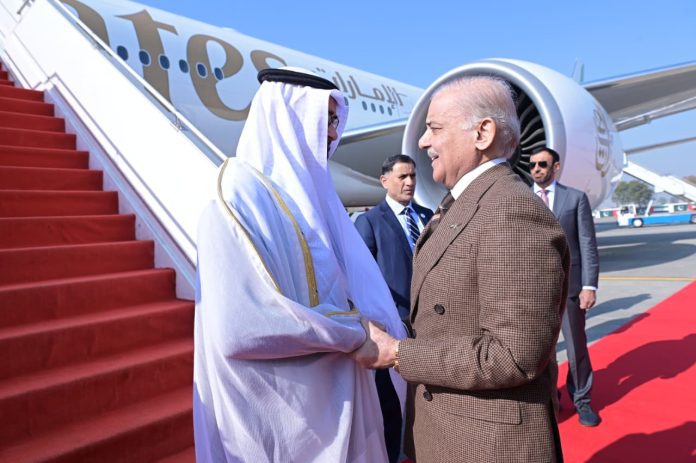
The UAE President’s visits to Pakistan in December 2025 and India in January 2026 occurred within weeks of each other, yet the outcomes differed in emphasis and substance. While Pakistan’s visit reaffirmed longstanding friendship and cooperation, India’s engagement produced a set of forward-looking economic and strategic agreements. Rather than signaling disengagement from Pakistan, this contrast reflects the evolving priorities shaping Gulf diplomacy and global economic decision-making.
An Evolving Diplomatic Environment
For many years, Pakistan–UAE relations have been anchored in deep people-to-people ties, defense cooperation, and shared cultural and religious bonds. Millions of Pakistani workers have contributed to the Gulf’s development, while security cooperation has remained a pillar of mutual trust.
However, the UAE’s external engagement model has evolved. As Abu Dhabi positions itself as a global center for logistics, finance, energy transition, and technology, economic viability and institutional readiness have naturally assumed greater prominence in partnership decisions. This shift does not diminish traditional relationships but complements them with a stronger focus on long-term sustainability.
Pakistan’s Economic Context
Pakistan’s limited economic outcomes during the visit should be viewed within the context of ongoing domestic challenges rather than as a reflection of diminished strategic relevance. The country continues to navigate:
- Macroeconomic stabilization pressures
- External financing constraints
- Frequent policy adjustments linked to political cycles
- Investor concerns related to regulatory consistency
In such an environment, international partners—including the UAE—often prefer cautious, incremental engagement. This approach preserves flexibility while allowing space for deeper cooperation as reforms take root and conditions stabilize.
Continued Strategic Relevance
Importantly, Pakistan’s strategic value to the Gulf has its own undeniable importance. Its role in regional security, counterterrorism cooperation, and maritime stability remains well recognized. The new defense frameworks should be understood less as a withdrawal of confidence and more as a reflection of a broader regional trend toward avoiding being drawn into Middle East and South Asian rivalries.
Defense and Technology Cooperation
Defense partnerships globally are increasingly linked to industrial collaboration, technology absorption, and supply-chain integration. Countries with greater fiscal space and manufacturing depth are better positioned to pursue such arrangements. Pakistan’s defense credibility remains intact, but current economic constraints limit the scope for expanded industrial-technology cooperation at this stage.
The UAE’s Long-Term Perspective
From Abu Dhabi’s standpoint, South Asia is not a zero-sum arena. The UAE’s engagement with India does not preclude deeper cooperation with Pakistan. Rather, it reflects a sequencing of priorities aligned with economic readiness. Pakistan remains part of the UAE’s long-term regional outlook, particularly as reforms progress and investment conditions improve.
A Constructive Takeaway
The key message is not one of exclusion but of transition. Global partnerships today are increasingly shaped by economic fundamentals and execution capacity. For Pakistan, this moment offers an opportunity to translate strategic relevance and goodwill into economically grounded cooperation through sustained reform, policy continuity, and institutional strengthening.
Conclusion: Opportunity Within Change
The differing outcomes of the UAE’s engagements with Pakistan and India emphasize a changing international environment rather than a shift in alliances. Relationships built on trust and history remain valuable, but they now operate alongside economic considerations.
As Pakistan advances on the path of stabilization and reform, the space for deeper, more structured partnerships with the UAE will expand. In a world where economics and geopolitics are increasingly intertwined, adaptability, not comparison, will define future success.
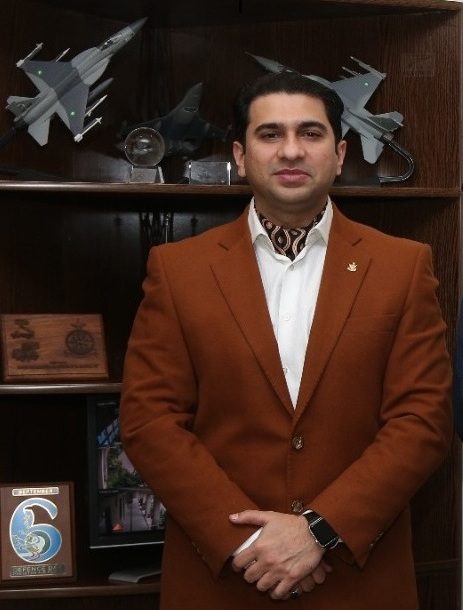
The author serves as Deputy Director General at the Institute of Strategic Communication & Economic Studies (ISCES) and previously held the appointment of Director Administration at DGPR, Pakistan Air Force. He has published extensively in leading national and international periodicals and is a specialist in strategic communication. He can be reached at ddg@iscesthinktank.org