
By Brigadier (R) Asif Haroon
Pakistan–Afghanistan relations have deteriorated sharply and are presently at one of their lowest points, primarily because of Kabul’s alleged failure to take credible and verifiable action against terrorist organisations operating from Afghan soil.
Islamabad has repeatedly urged the Taliban regime to prevent its territory from being used as a launching pad for terrorism against Pakistan and to honour the commitments it made under the 2020 Doha Agreement.
Despite repeated appeals from Pakistan, Kabul has largely remained unresponsive to Islamabad’s concerns. It has also paid little heed to calls for restraint from friendly countries seeking to mediate or defuse the escalating tensions.
The latest such effort reportedly came from Türkiye, whose intelligence chief, Ibrahim Kalin, visited Kabul and Kandahar. His reported cold reception in Kandahar underscored the difficulties confronting diplomatic efforts.
The very next day after his return, a devastating suicide attack took place in Kohat, further aggravating the already tense situation.
Pakistan maintains that the Afghan Taliban regime’s failure to prevent terrorist activity emanating from Afghan territory—particularly by the Tehrik-e-Taliban Pakistan (TTP)—continues to result in the loss of precious Pakistani lives and poses a serious threat to regional peace and stability.
Islamabad has also alleged that these militant networks receive external support, including from India. Tensions have gone beyond terrorism-related concerns, with cross-border attacks and clashes along the Durand Line further worsening bilateral relations.
After years of exercising what it described as strategic patience in the hope that the Taliban authorities would address Pakistan’s security concerns, Islamabad eventually adopted a more forceful posture.
From February 2026 onward, the Pakistan military reportedly intensified cross-border operations aimed at disrupting TTP sanctuaries, hideouts and launchpads, as well as targeting military and other infrastructure that Pakistan believes facilitates cross-border terrorism.
These cross-border strikes have been accompanied by intensified counterterrorism operations against Fitna al-Khawarij and Fitna al-Hindustan, as well as their facilitators, in the two principal theatres of militancy—Khyber Pakhtunkhwa and Balochistan.
Clearance and intelligence-based operations are continuing, with Pakistan’s security forces maintaining that their objective is to dismantle the terrorist infrastructure and prevent the re-emergence of militancy.
Against this backdrop, the recent escalation along the Pakistan–Afghanistan border represents a significant shift from prolonged diplomatic pressure and strategic restraint towards a more assertive security posture.
Chronology: Major Terrorist Attacks, Border Incidents and Pakistani Responses
17–27 September 2026
17 September
Hangu, Khyber Pakhtunkhwa (KP)
An IED/roadside bomb struck a security-forces convoy. In a separate engagement in Hangu, security forces also fought militants.
6 soldiers martyred in the IED attack; 4 militants killed in the Hangu engagement.
The attacks triggered intensified intelligence-based operations in Hangu and adjoining areas.
17 September
Awaran, Balochistan
Security forces conducted an intelligence-based operation in Badrang.
3 militants killed; weapons and ammunition recovered.
Operation Radd-ul-Fitna 3 continued.
18 September
Kohat, KP — Old Police Lines
Explosives-laden vehicle suicide attack at the Police Lines mosque during Friday prayers, followed by an armed assault on the compound.
Initial reports gave 21–22 dead; subsequent police/CTD reporting put the toll at 23, including 17 policemen and 6 civilians, with more than 100 injured. Eight attackers were subsequently killed.
A prolonged clearance operation lasted about 21 hours. Pakistani authorities subsequently linked the attack to militants operating from Afghanistan; the Afghan Taliban rejected such accusations.
18 September
Panjgur & Kachhi, Balochistan
Intelligence-based counter-terrorism operations. 7 militants killed — five in Panjgur and two in Kachhi. Weapons and ammunition recovered.
19 September
Panjgur & Chagai, Balochistan
Further security operations against militants. 11 militants killed, weapons, ammunition and explosives recovered.
19–20 September
Kohat, KP
Following the Police Lines attack, 8 attackers were killed according to police/CTD reporting; the final reported death toll from the attack is 23.
Police, CTD and security forces completed the clearance operation after prolonged fighting.
21 September
KP / Afghan Border Region
Pakistan conducted intelligence-based ground operations around Kohat, Hangu and Thal, followed by airstrikes against militant hideouts in the Afghan border region.
Pakistan reported 37 militants killed in the combined ground operations and strikes; its information ministry separately said more than 28 were killed in the cross-border strikes. Afghan authorities reported civilian casualties from the airstrikes.
This represented a significant escalation from purely domestic counter-terrorism operations to strikes against alleged militant sanctuaries across the border.
21 September
Balochistan — Ziarat/Shaban and other areas
Pakistani security forces launched/expanded operations against militant hideouts. The operation began around 21 September and became part of a 96-hour campaign in which more than 71 militants were eventually reported killed.
Operation Shaban and related operations continued through 27 September.
22 September
Nushki, Balochistan
Gunmen attacked police protecting polio vaccinators. Two policemen killed; polio workers survived. No group immediately claimed responsibility.
22 September
Kurram, KP / Afghan Border
Pakistani security forces foiled an attempted infiltration from Afghanistan. Pakistani sources said militants crossed/attempted to cross from the Nangarhar–Paktia side; Afghan Taliban forces opened fire on Pakistani posts afterwards.
Pakistani forces said the infiltration was stopped and Afghan border positions were subsequently engaged.
Pakistan responded against several Afghan Taliban posts/defensive positions, according to Pakistani security sources.
23 September
Kohat & Torkham Sectors
Eight drones reportedly entered Pakistani airspace from Afghanistan and were intercepted before reaching their targets. This became the immediate trigger for the major Pakistani aerial response on 24 September.
Afghan Taliban spokesman Zabihullah Mujahid denied that Kabul had launched them.
23 September
Kurram
Further reported cross-border firing after an attempted infiltration. Pakistani authorities said Afghan Taliban positions used heavy weapons, mortars and other arms.
Pakistani forces responded with small arms, heavy weapons and artillery, according to security sources.
24 September
Pakistan’s Responses
Khost, Paktika, Kandahar
Pakistan conducted aerial and drone strikes against ten locations in Afghanistan, describing them as TTP safe havens, hideouts, launchpads, drone-launch/storage facilities and associated military objectives. Targets were reported in Khost, Paktika and Kandahar.
The Afghan Taliban regime confirmed that their spiritual Headquarters, the compound of Mullah Omar in Kandahar, was struck. The site, reportedly used as Mullah Omar’s headquarters in the 1990s, was later turned into CIA Gecko Camp and remained in use until the Taliban takeover in 2021.
Reportedly, Emir Haibatullah Akhundzada was personally supervising the training of militants and suicide bombers in the two attached compounds.
Reportedly, on the day of the PAF strikes on this site, Haibatullah was holding a large meeting and many of the key Taliban leaders were killed.
Pakistani strikes reportedly hit areas including Gurbuz, Ismail Khel and Mandozai, including Gulan Camp and other sites.
Casualty figures remain disputed. Pakistan described the strikes as precise and limited to identified military objectives connected with drone attacks. Afghan authorities condemned them.
Afghan authorities reported casualties; Pakistan described military targets.
The strikes marked a substantial expansion of the geographic scope of Pakistan’s response.
The summary of the targets struck by the PAF is:
– Afghan drone launch pads at Gulan Camp, Ismail Khel & Mandozai in Khost.
– Sahra Bagh terror facility in Khost. It was struck again the following night.
– Spiritual Headquarters, the compound of Mullah Omar in Kandahar, also known as Mullah Serai, it also serves as the residence of the regime’s Kandahar governor.
– Multiple Afghan Taliban terrorist sites in Paktika, including a suicide bombers training camp.
Night 24–25 September
Gulistan Sector, Balochistan
Pakistan reported an attempted Afghan military incursion/aggression along the border. Pakistan claimed at least 13 Afghan Taliban personnel killed and several wounded. Afghanistan denied the Pakistani account and presented its own version of the clash.
25 September
Gulistan Frontier & Spin Boldak
Continued reporting about the border confrontation at Kurram sector and Pakistani retaliation.
Pakistan rejected Kabul’s claim that a Pakistani post near Spin Boldak had been destroyed. Instead, it showed videos of several Afghan posts that were destroyed by the Pak forces.
25 September
Balochistan — Nushki and Shaban
Intensified counter-terrorism operations.
Pakistani authorities reported 33 militants killed from 21 September onwards, including 11 in a Nushki operation and additional deaths in Operation Shaban. Clearance operations continued.
26 September
D.I. Khan — Aman Mela/Darazinda, KP
Vehicle-borne suicide attack on a police checkpost. An explosives-laden vehicle was reportedly rammed into the checkpoint.
By 27 September, reports put the toll at 12 dead and about 30–35 injured.
Security operations were launched in the area; no group had formally claimed responsibility in the reports reviewed. Suspicion centred on TTP-linked militants.
26 September
D.I. Khan / Darazinda
Attack on Rescue 1122 ambulance transporting victims of the checkpost bombing.Two rescue workers killed, another injured. Counter-terrorism operation continued.
26 September
Mand, Balochistan
Militants reportedly attacked security personnel. Attackers were reportedly repulsed and fled. Security forces received support from local residents.
26–27 September
Duki, Balochistan
Armed militants attacked a road-construction camp, killing a security guard and abducting workers.
Reports initially said 12 workers abducted; another report subsequently put the number at 18. One guard was killed and another injured. Police, FC and other law-enforcement agencies launched a search operation.
26–27 September
Dera Bugti, Balochistan
Armed militants attacked a gas-exploration camp and the residence of a local peace-force/tribal leader.
A peace-force member was killed and others wounded. Pakistani/local authorities subsequently reported several militants killed and some arrested.
Local peace forces and security personnel engaged the attackers.
27 September
Balochistan — Shaban and other areas
Pakistan announced the culmination/continuation of a large counter-terrorism campaign. More than 71 militants killed during the preceding 96 hours, according to ISPR.
On 27 September, terrorists attacked Kalchas security camp in Baluchistan, which was foiled by the security forces. 8 Fitna Al Khawarijs were killed and 7 were arrested alive.
False Allegations by the Taliban
On September 27, Pakistan rejected Kabul’s allegations that several groups affiliated with Daesh had crossed into Kamdesh district of Nuristan with the support of Pakistani security forces.
The Taliban claimed to have killed 28 of the alleged infiltrators and captured 32 others alive. A video was also circulated as purported evidence to substantiate these allegations.
Pakistan, however, categorically rejected the claims, stating that they had not been substantiated by a shred of credible evidence.
Islamabad described the allegations as a crude attempt to deflect attention from the Taliban regime’s own alleged role in facilitating cross-border terrorism against Pakistan.
Afghan Military Mobilisation
Afghanistan’s Defence Minister Mullah Yaqoob, reportedly ordered the deployment of all Afghan forces along the Pakistani border. This is reportedly the first time in Afghanistan’s history that the 217 Omar Corps, headquartered in Kunduz, has moved towards the Pakistani border despite the ongoing internal insurgency.
In addition, the 207 Al-Farouq Corps, stationed in Herat, and the 209 Al-Fatah Corps, stationed in Mazar-i-Sharif, have reportedly been ordered to move immediately to the Pakistani border.
The withdrawal of troops from Kunduz, Mazar-i-Sharif and Herat and their deployment along the Pakistani border indicates a potentially serious threat.
If the strength of all these forces is combined, it reportedly exceeds the number of Pakistani troops deployed along the Afghan border.
Reportedly, Defence Minister Yaqub’s best unit, known as Red Unit, was badly mauled by Pakistan’s Special Operations Group in a hand-to-hand fight.
Pakistani intelligence agencies are reporting large military convoys entering Nangarhar, Paktia, Paktika, Khost.
On 26 September, four Indian transport cargoes landed at Kabul and Kandahar airports via Iran. Reportedly, big boxes of anti-tank missiles, shoulder-launched air defence missiles and drones were unloaded .
The Escalation Sequence
The events show a fairly clear escalatory chain.
Hangu IED/engagement → Kohat Police Lines suicide attack → Pakistani ground/air counter-terrorism operations → cross-border infiltration attempts → drone incursions around Kohat/Torkham → Pakistani strikes on 10 Afghan locations → Afghan-Pakistani border clashes in Balochistan → continued militant attacks in KP and Balochistan.
The 23 September drone incident is particularly important because Pakistan explicitly connected the 24 September strikes to the preceding drone attacks, while the Taliban denied launching the drones.
There is also an important distinction between terrorist activity inside Pakistan and state-to-state border fighting.
Kohat, Hangu, Nushki and D.I. Khan incidents belong primarily to the counter-terrorism category, whereas the Kurram/Gulistan episodes and the 24 September strikes represent an increasingly direct Pakistan–Afghanistan military confrontation.
Pakistan’s Threat Perception
After 9/11, the US in collusion with its Western allies, India and Israel, triggered terrorism in Pakistan and used it as a weapon of war to destabilize, denuclearize and balkanize Pakistan.
The strategy applied against Pakistan was to hire local proxies, train and equip them and employ them with a view to bleed, exhaust and demoralise the security forces, pin down as many regular troops in the pin down to disturb the military balance on Pakistan’s eastern front, weaken the economy and socially divide the society, and create conducive conditions for the Indian military to launch offensive under the concept of Cold Start Doctrine.
Failing to disable Pakistan’s nuclear program, and forced to exit from Afghanistan in August 2021, the conspirators decided to reinforce failure by using the Afghan soil, and reinvigorating the same strategy under the auspices of India, Afghanistan and Israel. The social, political and economic fault lines created during the 20-year war on terror were to be further accentuated.
From 2022 onwards, Pakistan witnessed a sharp surge in terrorist attacks, with the threat intensifying year after year. The year 2025 proved particularly challenging, as Pakistan faced multiple internal security and political challenges, while also coming under attack from India in May and Afghanistan in October.
2026 is proving to be the bloodiest year. Since 26 September, intense clashes have reportedly been taking place in Kurram, Lower Chitral and around the Ghulam Khan border. For the first time, Afghan forces are reportedly attempting to target Pakistani posts with anti-tank missiles.
It should also be kept in mind that the Afghan forces have been equipped with American weapons and modern armoured vehicles.
The availability of American weapons and military equipment, including advanced imagery and night-vision devices, coupled with the growing presence of drones in the Afghan military’s inventory, has significantly heightened Pakistan’s threat perception.
Reports regarding the provision of drone-manufacturing facilities by Israel have further added to Islamabad’s security concerns.
Pakistani Air Force fighter aircraft and a large number of armed drones are reportedly engaged in operations inside Afghanistan.
People living along the border report hearing powerful explosions from inside Afghanistan. Pakistani forces have also reportedly been permitted to conduct ground operations inside Afghanistan.
There are reports that Pakistani troops have achieved significant operational success and inflicted substantial losses on the opposing side.
Reportedly, at no point could the Afghan troops resist and fight back the Pakistani attackers; they abandoned their posts and their injured comrades in panic.
Drone Threat from Afghanistan to Pakistan
Do you know why drones were sent from Afghanistan towards Pakistan, what type of drones they were, and how Pakistan thwarted them?
In a country facing severe economic difficulties, where did this technology come from? Let us understand the matter in detail.
On September 23, drones were sent from Afghanistan towards 10 different locations in Pakistan. However, Pakistan’s air-defence system responded in a timely manner and did not allow a single drone to reach its intended target.
The question now is: where did these drones acquire GPS and guidance systems? According to many analysts, the capability is being linked to equipment left behind in Afghanistan in 2021. (7.2 billion dollars weapons and equipment of the USA).
The most important question is: How did this capability reach Afghanistan?
A recent United Nations monitoring report states that the use of night-vision devices, thermal-imaging equipment, sniper systems and drone attacks by Fitna al-Khawarij has been observed, and the report indicates that certain facilities have been provided to them.
But where did the Afghan authorities themselves obtain this equipment? This remains a major question mark.
According to some reports, attacks from Afghanistan against Pakistan intensified at a time when important diplomatic visits were taking place in the region.
According to SIPRI data, a significant share of Israel’s drone exports between 2020 and 2024 went to India.
The Eurasian Times described the situation in three words: “Indian funding, Israeli technology and Afghan militants.”
The same UN report states that operational links among Fitna al-Khawarij, Al-Qaeda, ISIS-Khorasan and Fitna al-Hindustan are increasing in Afghanistan.
And finally, there is something the world needs to understand. This threat is not confined to a single border. The same network has been linked to attacks on Chinese nationals in Tajikistan, the killing of 84 people in Kerman, Iran, and several foiled ISIS-Khorasan plots in Europe.
The war Pakistan is fighting today is not merely its own war. Having sacrificed more than 80,000 lives, Pakistan has kept this fire contained along its own borders. Pakistan is the last bulwark against terrorism.
The world must understand that if this fire is not extinguished today, tomorrow its flames could reach London, Berlin and Moscow as well.
Diplomatic Offensive
Buoyed by the significant military successes in the ongoing border clashes with Afghanistan, Pakistan has intensified its diplomatic efforts to mobilise international support.
Islamabad is seeking to engage the United Nations, the United States, China, Russia, Central Asian states, Türkiye, Iran, and the Arab Gulf States in an effort to build wider diplomatic pressure on the de facto authorities in Kabul and press them to address Pakistan’s security concerns.
Security Situation in Northern Afghanistan
While a substantial portion of the Afghan Taliban forces is reportedly being deployed along and engaged on the Pakistani frontier, the security situation in Northern and Northeastern Afghanistan appears to be becoming increasingly volatile.
The National Resistance Front (NRF), Afghanistan Freedom Front (AFF), and other anti-Taliban groups have reportedly intensified attacks against Taliban positions in and around Kabul, Faryab, Badakhshan and other Northern provinces.
The diversion of Taliban forces towards the Pakistani border could potentially create security gaps in the north, providing anti-Taliban groups with greater opportunities to expand their activities.
Reports from the ground further suggest that Nuristan and Kunar could face increasing pressure, followed by Badakhshan. Anti-Taliban forces have reportedly claimed control of Kamdesh in Nuristan and Gurdash in Kunar.
If sustained, the simultaneous pressure along the Pakistani border and growing insurgent activity in Northern Afghanistan could place the Taliban authorities under considerable military and administrative strain.
To Summarise:
After Badakhshan, Now Nuristan – The Taliban Regime is Losing Ground. The cracks in the Taliban’s so-called “Islamic Emirates” are getting bigger day by day.
After the major unrest in Badakhshan, now heavy fighting has erupted in Kamdesh, Nuristan.
To cover up their humiliating failure, they are doing what they do best – blaming Pakistan for supporting the resistance.
On the other side, the anti-Taliban resistance, AFF has claimed significant battlefield gains, proving that the spirit of resistance is alive and stronger than ever.
What does this tell us?
1. The Taliban have no real control: They claim they control all of Afghanistan, but they can’t even maintain peace in two provinces. If they were a legitimate government, people wouldn’t be picking up arms against them.
2. Guns can’t buy legitimacy: The Taliban may have American weapons and numerical superiority, but they have zero public trust.
3. They are ruling Afghanistan through fear, torture, and force. You can control a territory with guns, but you can never win the hearts of Afghans with brutality.
4. Resistance is not dead: These attacks prove that Taliban opponents still have the capacity, courage, and local support to challenge this terrorist regime directly.h
5. The Afghans need a peaceful, inclusive, and legitimate political system — not a regime that survives only on violence. The fall of this regime has begun from within.
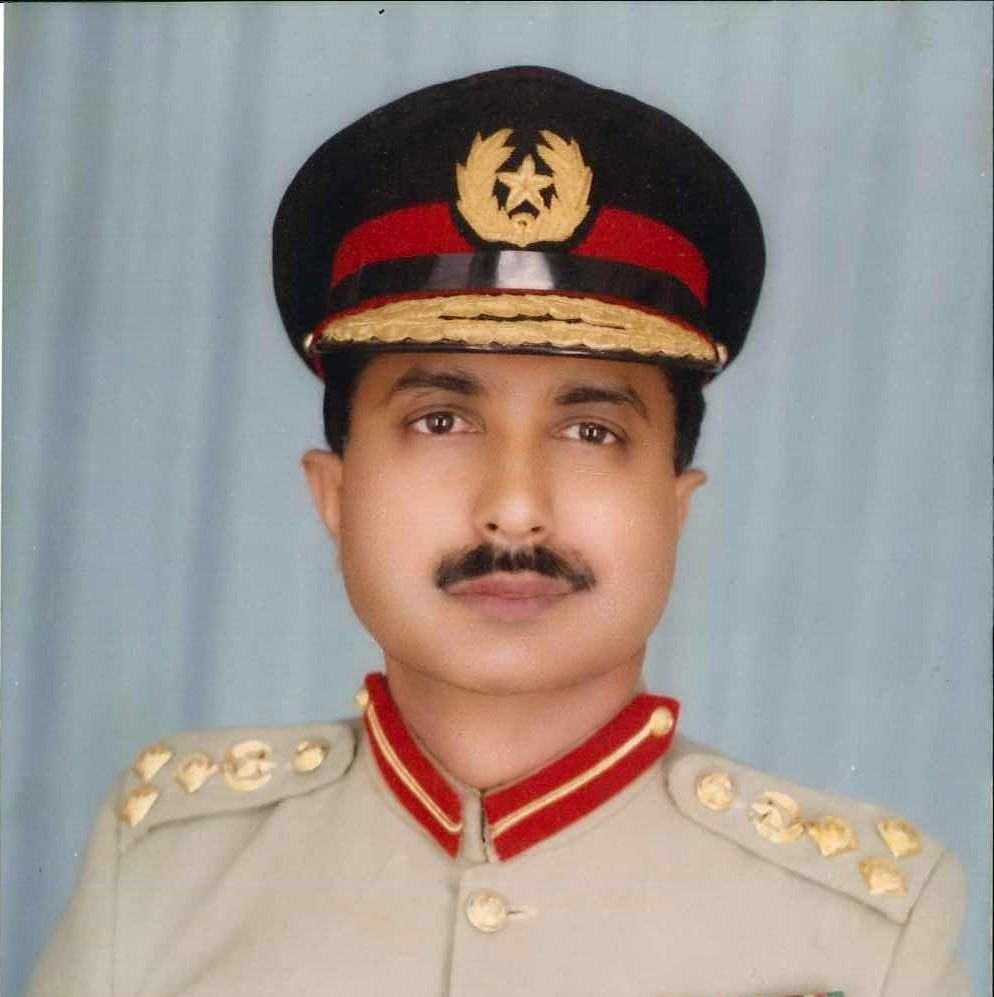
A retired brigadier and war veteran of the Battle of Hilli, he is a Command & Staff and War Course–qualified officer with an MSc in War Studies, and a former Defence Attaché to Egypt and Sudan who also served as Dean of the Corps of Military Attachés in Cairo. Appointed the Army’s spokesperson in 1992 and later Honorary Colonel of his battalion, he is now a defence and geopolitical analyst, columnist, and author of five books, serving on the Board of Governors of ISCES and leading multiple research and policy institutions.