By Aamir Zulfiqar Khan, IGP Police
For a moment, let your imagination fly.
It is October 27, 1962. U.S. destroyers are harassing Soviet submarine B-59, with practice depth charges to force it to the surface. Out of contact with Moscow, Captain Valentin Savitsky and the political officer believe that war has started and decide to launch a 10-kiloton nuclear torpedo.
However, protocol requires approval from three officers. Vasili Arkhipov, as second-in-command, refuses to agree despite the intense pressure and deteriorating air quality aboard the sub. His refusal to authorize the launch of the nuclear torpedo averts a near-certain nuclear war.
Now, come to April 7, 2026. From the threat of “A whole civilization will die tonight, never to be brought back again” to a ceasefire for two weeks, negotiated by Pakistan between Iran and the USA, is a story of extremes.
Hollywood can never do justice to either.
As a student of geostrategy and a practitioner of Law enforcement, I can say with pride that the spectacle we witnessed in Islamabad on 10th and 11th April 2026 was a remarkable display of Pakistani diplomatic finesse.
This was not the first time. Pakistan has a rich history in resolving conflicts and changing the direction of world history.
Pakistan played a pivotal role as the secret intermediary for President Nixon’s 1972 visit to China, acting as the key diplomatic conduit that allowed Washington and Beijing to establish contact. This was the most important repudiation of the second half of the 20th century.
Pakistan hosted the historic 2nd OIC Summit in Lahore from February 22–24, 1974, to bolster Muslim unity following the 1973 Arab-Israeli War. Pakistan gathered leaders from over 35 nations to foster solidarity and facilitated the recognition of Bangladesh. This put Pakistan in the leadership role of the Ummah.
Then, Pakistan played a critical, central role in the 1988 Geneva Accords by engaging in years of UN-brokered, indirect negotiations as a frontline state to secure the withdrawal of Soviet forces from Afghanistan.
Signing on April 14, 1988, Pakistan acted as a principal signatory to the bilateral agreement with Afghanistan on non-interference and voluntary repatriation of over 3 million Afghan refugees residing in Pakistan. These accords ended the Russian invasion of Afghanistan.
Fast forward to 2021. During the U.S. withdrawal from Afghanistan, Pakistan played a crucial role by facilitating the Doha negotiations, enabling the evacuation of Western personnel, and advocating for international engagement with the Taliban to prevent a total state collapse. If things had not gone as planned, in all likelihood, it would have been a bloody withdrawal.
Thus, Pakistan has always been a country that believes in peace. It has always held the charter of the United Nations in high esteem. This is further proven by the fact that Pakistan consistently ranks among the top five in the troop-contributing countries in the United Nations peacekeeping operations. As of early 2026, Pakistan is one of the largest contributors with over 8,000 personnel deployed, constituting over 9% of the UN’s total deployment.
Three factors played the main role in enabling Pakistan to get an operational ceasefire, when only hours were left, before the deadline lapsed.
First, the maturity of the Political and military leadership. Not only Pakistanis, but every person who loves peace needs to appreciate the sagacity and leadership of Prime Minister Mian Shahbaz Sharif and his civilian team, and Field Marshal Syed Asim Munir and his military team. Pakistan did not take a side. It remained neutral, urging restraint and continuously calling for peace.
Secondly, it kept open its communication channels with both Iran and the USA. This was the linchpin. If it had shied away, as some other countries did, it would not have been in a position to broker peace.
Pakistan kept all its friends on board. China, Russia, Saudi Arabia, Turkiye, Egypt, UAE, Qatar, Oman, and many other important world capitals were kept in the loop. This created the international environment of support for Pakistan’s efforts and played a key role in facilitating the ceasefire and the talks.
The Islamabad talks need to be understood not as an isolated diplomatic success but as part of a long and consistent strategic tradition. It reflects a very deep institutional memory, combining restraint, access, credibility, and tact in equal measure. Despite serious threats by the parties to each other, Pakistan responded with persistence, measured messaging, continuous engagement, and avoidance of spectacle.
Another important lesson is that Pakistan exercised trusted neutrality. It spoke to Washington without suspicion and to Tehran without alienation. This rare diplomatic bandwidth cannot be manufactured overnight. It is stitched over time and is a reflection of adept foreign policy handling for decades.
Equally impressive was Pakistan’s ability to remain calm, despite immense pressure. Crises diplomacy often fails not due to lack of intent but due to the inability to synchronize warring parties and other stakeholders. Pakistan managed to align regional and world powers into a shared understanding that hostilities would lead to an Armageddon, thus creating an impetus that neither warring party could ignore.
Pakistan’s conduct also proved that middle powers, when strategically positioned, can impact geopolitics much above their weight and outside their geography. Pakistan stepped into the vacuum of interlocutors, boldly and self-assuredly. It proved that economic size and military might are not the only tools of power. Diplomacy still plays a dominant role.
History shall record that it was not the inevitability of conflict that defined the moment. It was not power but poise that prevailed. Pakistan did not seek the spotlight. In an era of senseless noise, it chose nuance. This was not chance but character.
When the call for peace came, Pakistan stepped forward. Resultantly, the world stepped back from the brink.
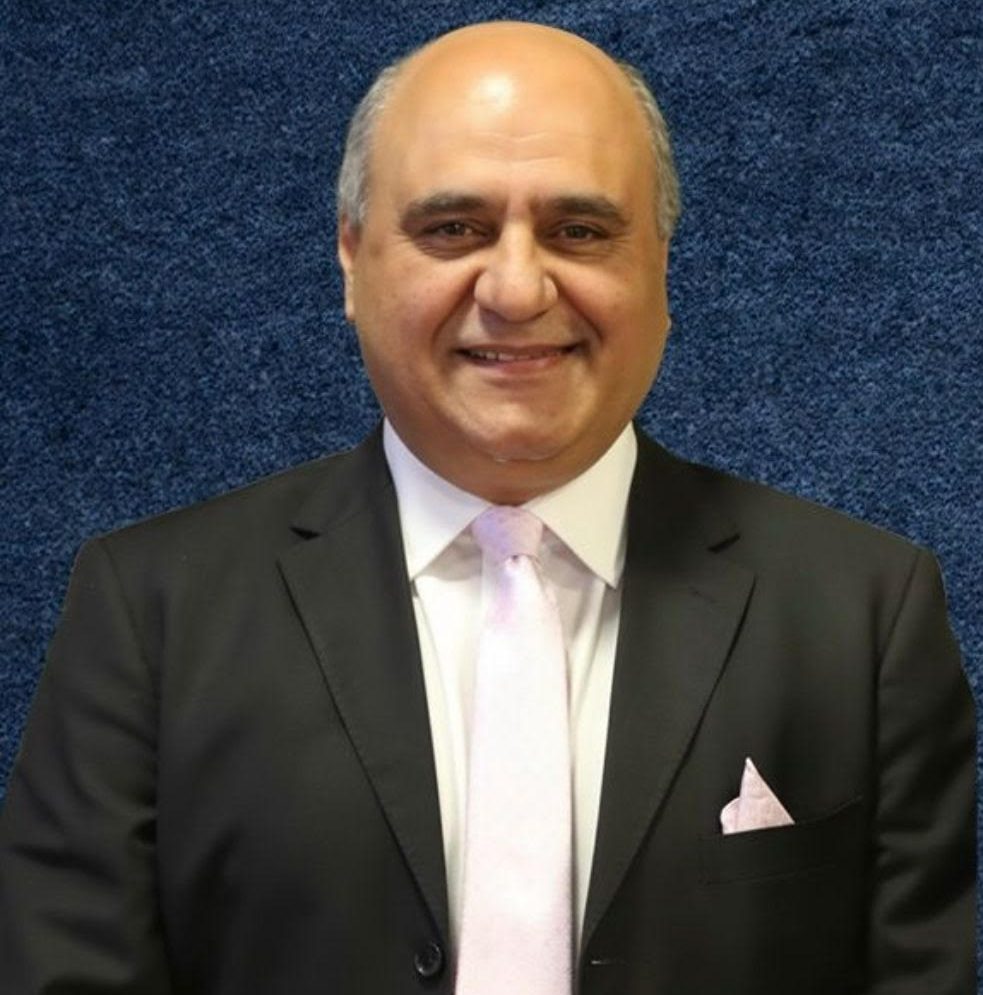
The writer has served as Inspector General of Police, Punjab, Islamabad, and National Highway and Motorways Police, and as DDG ANF Pakistan. He is a senior public policy expert with deep insight into conflict resolution and regional affairs. He can be reached at amzkhan.lhr@gmail.com