By Brigadier (R) Asif Haroon Raja
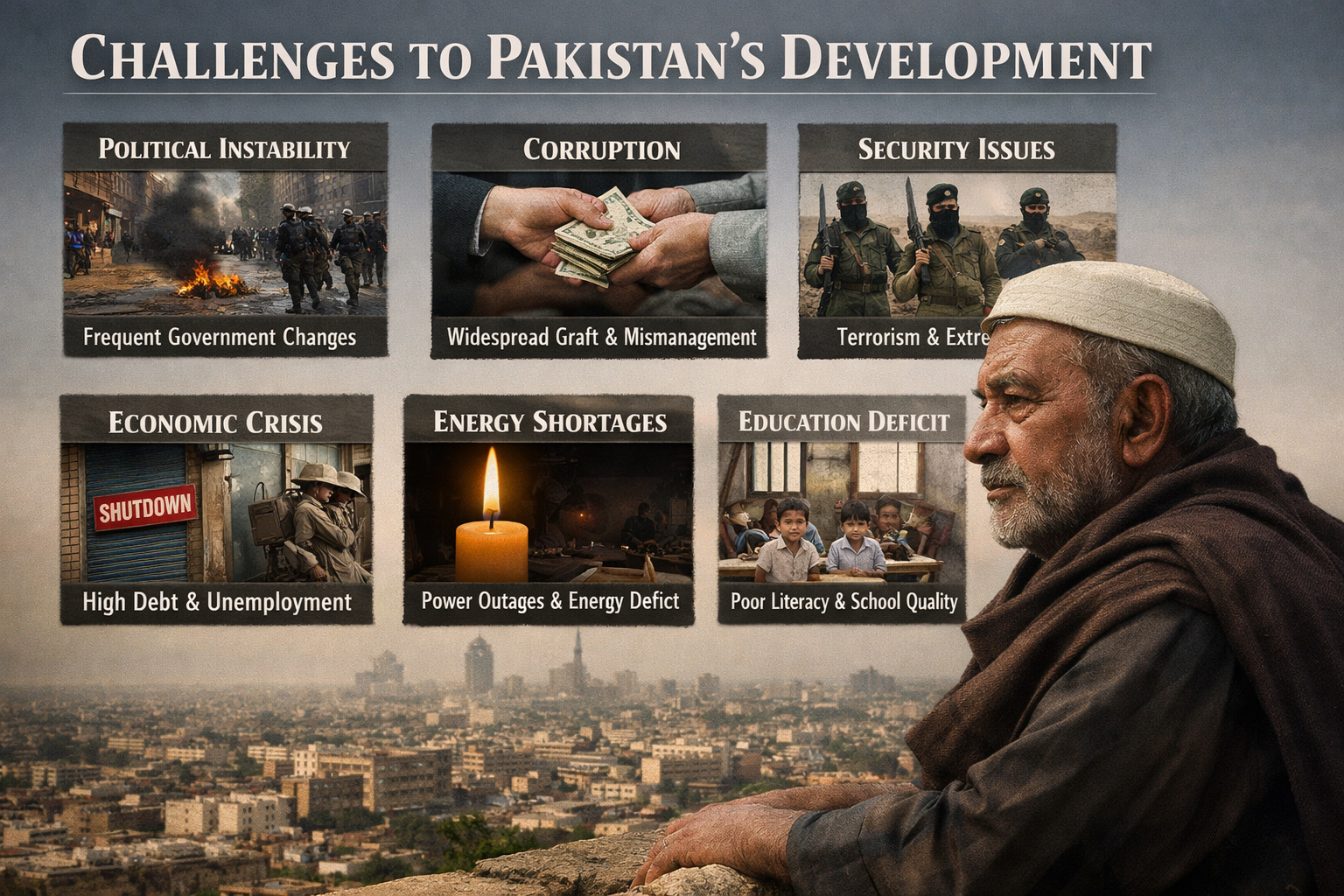
Pakistan’s repeated cycles of political instability, economic crisis, and institutional fragility have long raised an important question: why has the country struggled to achieve steady and sustainable progress? The answer lies in a combination of historical, political, structural, and institutional factors.
Historical Foundations and Early Setbacks
Pakistan began its journey in 1947 under extremely difficult circumstances. It inherited a limited administrative infrastructure, scarce financial resources, and the immediate burden of refugee rehabilitation.
The early deaths of Quaid-e-Azam Muhammad Ali Jinnah and Liaquat Ali Khan deprived the country of strong, visionary leadership at a critical time. Their absence created a leadership vacuum that later contributed to instability.
In the absence of cohesive national leadership, provincialism emerged. Tensions between the centre and the provinces, particularly the Bengal–Punjab power imbalance, weakened national unity.
Regional grievances in former East Pakistan, interior Sindh, Balochistan, and Khyber Pakhtunkhwa deepened over time, contributing to long-term political fragmentation.
Security Concerns and the “Security State” Paradigm
During its formative years, Pakistan faced hostility from India and strained relations with Afghanistan. These external threats compelled policymakers to prioritise defence and security over economic development. As a result, Pakistan gradually evolved into a security-centric state.
While national defence was undeniably important, the continuous prioritisation of security over economic reform and institutional development limited investment in education, healthcare, industrial growth, and social welfare. This imbalance contributed to recurring economic vulnerabilities.
Political Instability and Civil-Military Imbalance
Another significant factor has been political instability. Weak political institutions, bureaucratic dominance, and early power struggles eroded democratic foundations. Palace intrigues and the bureaucratic–military nexus during the early years created space for military interventions.
Repeated military takeovers disrupted democratic continuity and weakened civil–military relations. At the same time, political parties often failed to demonstrate internal democracy, unity, or long-term policy consistency. Infighting, short-term interests, and governance failures undermined public trust and provided justification—direct or indirect—for non-democratic interventions.
Governance, Accountability, and Institutional Weakness
A persistent obstacle to progress has been weak governance and inconsistent accountability. Institutions have frequently been politicised, and the rule of law has not always been applied impartially.
Corruption, though a global phenomenon, has had deeper consequences in Pakistan due to fragile accountability mechanisms and prolonged political instability.
When accountability is selective or compromised, public confidence erodes and governance suffers.
The absence of exemplary leadership comparable to the integrity associated with the country’s founding figures has further deepened public disillusionment.
Democracy and Structural Challenges
Pakistan has struggled to establish a stable, genuine democracy. Globally, democracy itself faces challenges, including elite capture, populism, and inequality. However, in Pakistan, democratic weaknesses are compounded by institutional fragility, elite dominance, and economic inequality.
Another structural issue has been the tension between constitutional commitments to Islamic principles and the continued reliance on inherited colonial administrative, legal, and governance systems.
This has created a perceived dichotomy between ideals and practice. Political actors often invoke religion rhetorically, while governance structures largely remain unchanged. This gap between rhetoric and reform has contributed to confusion and public frustration.
Socioeconomic Inequality
Like many countries, Pakistan faces wealth concentration in a small elite class. However, widespread poverty, limited social mobility, and unequal access to quality education and healthcare have intensified socioeconomic divisions. Without inclusive development, political instability and dissatisfaction persist.
Conclusion
Pakistan’s recurring crises cannot be attributed to a single cause. They stem from a combination of early leadership losses, security pressures, political instability, weak institutions, inconsistent democratic practices, governance failures, and socioeconomic inequality. External factors have played a role, but internal structural weaknesses have been more decisive.
Despite these challenges, Pakistan possesses significant potential: a young population, strategic geographic location, agricultural and mineral resources, and resilient civil society. The issue is not lack of capability, but lack of sustained institutional reform and policy continuity.
Recommendations
Strengthen Democratic Institutions
Political parties must practice internal democracy and prioritise national interests over personal or partisan gains. Civil–military relations should be clearly defined within constitutional boundaries.
Prioritise Economic Reform
Shift the focus from short-term political gains to long-term economic stability, industrial growth, export expansion, and human capital development.
Ensure the Rule of Law and Independent Accountability
Accountability mechanisms must be impartial, transparent, and free from political influence to restore public trust.
Institutional Reforms
Depoliticise state institutions, modernise governance systems, and implement merit-based appointments across bureaucracy and public sectors.
Invest in Education and Human Development
Sustainable progress depends on quality education, technical training, healthcare reform, and poverty alleviation.
Promote National Cohesion
Address provincial grievances through equitable resource distribution, decentralisation where appropriate, and inclusive policymaking.
Policy Continuity
Major economic and development policies should transcend political cycles to ensure stability and investor confidence.
In summary, Pakistan’s progress depends not on changing systems superficially but on strengthening institutions, enforcing the rule of law, ensuring accountability, and cultivating visionary leadership committed to national development rather than personal or factional interests.
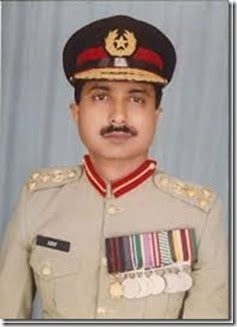
A retired brigadier and war veteran of the Battle of Hilli, he is a Command & Staff and War Course–qualified officer with an MSc in War Studies, and a former Defence Attaché to Egypt and Sudan who also served as Dean of the Corps of Military Attachés in Cairo. Appointed the Army’s spokesperson in 1992 and later Honorary Colonel of his battalion, he is now a defence and geopolitical analyst, columnist, and author of five books, serving on the Board of Governors of ISCES and leading multiple research and policy institutions.