By Amir Zulfiqar Khan (PSP)
World War II had resulted in an estimated 70 to 85 million deaths, making it history’s deadliest conflict. Of the casualties, roughly two-thirds were civilians, with the Soviet Union and China suffering the highest losses. Realizing, that after arrival of the atomic bomb era, a WW-3 could end the planet, representatives from the US, UK, USSR, and China held a conference on August 21, 1944 at the Dumbarton Oaks estate in Georgetown, Washington, D.C. They discussed the structure of a new international body, culminating in the Dumbarton Oaks Proposals.
These formed the basis for the 1945 San Francisco Conference where the United Nations Charter was drafted, and the organization officially began on October 24, 1945, with its first substantive meetings (General Assembly, Security Council) convening in London in January 1946.
Without going into the successes and failures of the UN, the cornerstone of international relations revolved around the US led military and economic bloc versus the Soviet Union and its allies, till 1990s. The order was never perfect, never neutral and never totally inclusive. The mere fact that 5 countries had been given the right of veto, made the Security council an exclusionary body and was in effect continuation of the historical reality of power-based international relations.
The post 2nd world war system rested on several assumptions. First assumption was that the USA would act as a stabilizing hegemon. Secondly, economic growth would reduce political conflict. Lastly, rules-based structure could restrain raw power. However, what is to be noted is that this was a western structure, which delivered relative stability and prosperity. But for much of the global south, the order was exclusionary and deeply unequal.
Despite, the United Nations, while a precise total is elusive due to varying definitions of “war” (vs. insurgency or skirmish), hundreds of significant armed conflicts and dozens of major wars occurred globally in this 45-year period, a significant chunk of the Cold War era.
Being the architect of this structure and becoming the hyperpower after 1990, USA sought UN cover for the wars it launched in Iraq and Afghanistan. The need for an international consensus was felt in order to ensure a semblance of international law and ensure the continuation of the order required for ensuring that no major war would erupt between the major powers.
But post 2010, in all likelihood because of the imbroglio in Afghanistan and the dire situation in the middle east, American thought started changing. By the time President Donald Trump became President in 2016, “Manifest Destiny”, a concept coined by John O’Sullivan in 1845, that the United States was divinely ordained to expand across the North American continent from the Atlantic to the Pacific, spreading democracy and American ideals, again became a foundational element of American identity and expansionism.
However, in order to get the complete picture, it is also necessary to dilate upon the evolution of USSR and later Russia and China, in this era.
USSR created its own Sphere of influence, resorting to military intervention, where needed. It also backed allied regimes and insurgencies in Asia, Africa and Latin America. It would be fair to assert that it viewed international law as sub-ordinate to strategic necessity. After USSR, Russia after being significantly weakened, reasserted its regional dominance like in Chechnya and Georgia, through military intervention. In 2022, Russia attacked Ukraine, signaling that its ideology had shifted to hard realism and nationalism to counter constant security anxiety.
China, avoided global military overstretch and ideological export. It focused on borders and sovereignty. As a policy, it used diplomacy, trade, its integration in global economy and infrastructure influence to conduct its foreign relations.
After Russian attack on Ukraine and China beginning to flex its muscles, challenging USA in the western hemisphere, Africa and South-China Sea, the second Trump presidency started a process where power was to be used to ensure American hegemony. First came the tariff war. GATT and later WTO, which had defined the economic world order post 2000, became a casualty. Except for China, Russia, India and North Korea, other countries found it difficult to face the tariff pressure. Europe, which had been a force to reckon with in yester years, saw its status plummeting. NATO came under severe stress. The threat of an expansive Russia and a non-committal USA, further expounded the security concerns.
The “Donroe Doctrine”, which is being trumpeted as a Trump Corollary to the Monroe Doctrine, describes a desire by the second Trump administration to assert American predominance in the Western Hemisphere. Trump’s efforts to rename the Gulf of Mexico, acquire Canada, the Panama Canal and Greenland as well as pursuing military action against Venezuela have all been cited as part of a Trump corollary to the Monroe Doctrine. Additionally, Trump’s MAGA and pulling out of international agencies means that U.S.A is focusing on its own hemisphere at the expense of traditional alliances, such as NATO.
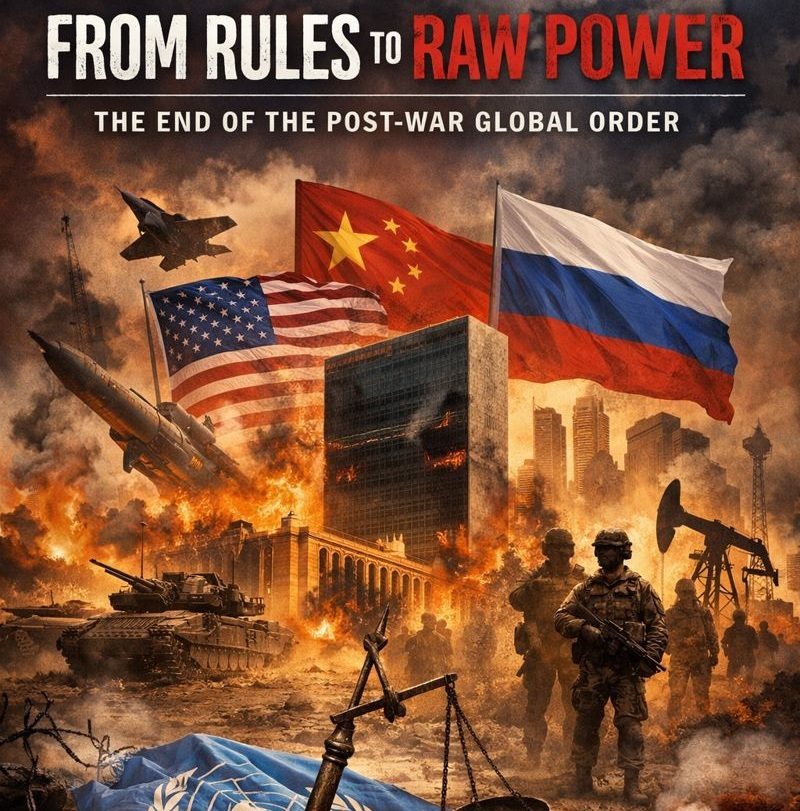
The resultant weakening of the world order has been remarkable. Besides Europe, United Nations has been pushed to the sidelines. Raw power has replaced the requirement of international consensus. The philosophy of “Spheres of influence” is back.
It reflects exhaustion of the system built for a different era, struggling to govern a world marked by diffusion of power, deep inequality and the looming threat of another world war. History tells us that transitions between world orders are periods of increased hostility. Whether, the world succeeds in resetting the scale will depend on how the situation develops in 2026.
For Pakistan, this is going to be a very sensitive period. The transition presents profound strategic and tactical risks, with very small space for error. Positioned at the cross-roads, Pakistan will have to balance its relations with the USA and China, handle instability in Iran and manage its acrimonious relations with Afghanistan and India. In this era, diplomatic foresight, strategic restraint, economic progress and internal political inclusiveness is the need of the hour.
Any misstep or miscalculation can cost us dearly.
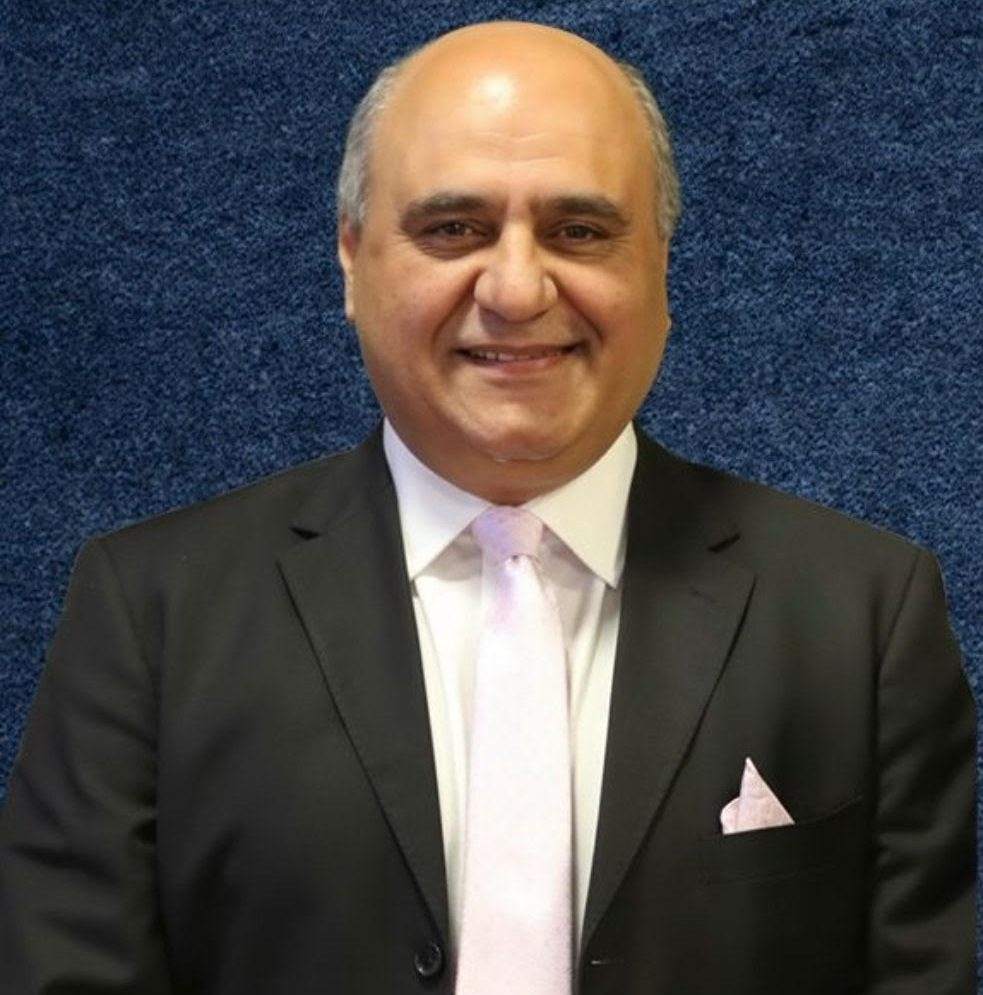
The writer has served as Inspector General of Police, Punjab, Islamabad, and National Highway and Motorways Police, and as DDG ANF Pakistan. He is receipent of Quaid-e-Azam Police Medal (QPM) and President’s Police Medal (PPM). He is also a senior public policy expert with deep insight into conflict resolution and regional affairs & can be reached at amzkhan.lhr@gmail.com